

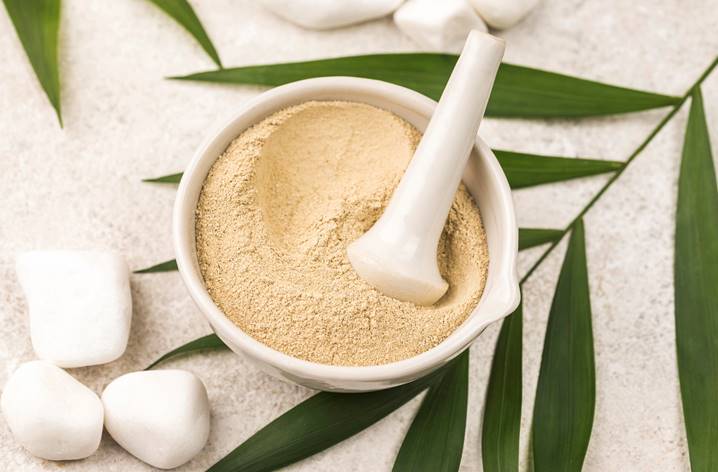
Ashwagandha (Withania somnifera) is one of the most widely used herbs in Ayurvedic medicine. Traditionally classified as a “Rasayana” or rejuvenating herb, it has been used for centuries to support overall health, resilience, and vitality. Today, Ashwagandha is commonly marketed for reducing stress, improving energy levels, and supporting physical performance. However, scientific research suggests that its potential benefits extend beyond these well-known uses.
Ashwagandha contains several biologically active compounds, including withanolides, alkaloids, sitoindosides, and flavonoids. These compounds are believed to contribute to its adaptogenic properties, helping the body respond to physical and psychological stressors. While current evidence is promising, it is important to recognize that Ashwagandha is not a cure-all, and many of its proposed benefits require further investigation.
Ashwagandha and Stress Management
The strongest clinical evidence for Ashwagandha relates to stress reduction. Chronic stress can increase cortisol levels, negatively affecting sleep, mood, metabolic health, and overall well-being.
A randomized, double-blind, placebo-controlled study found that Ashwagandha supplementation significantly reduced perceived stress scores and serum cortisol levels compared with placebo (Chandrasekhar et al., 2012). Similar findings have been reported in subsequent clinical trials and systematic reviews.
A meta-analysis published in Medicine (Baltimore) concluded that Ashwagandha supplementation may help reduce stress and anxiety symptoms, although larger and longer-duration studies are needed to confirm these effects (Pratte et al., 2014).
Key Health Benefits
1. Cognitive Health and Mental Performance
Beyond stress management, researchers have explored whether Ashwagandha may support cognitive function. Chronic stress and inflammation can negatively affect memory, attention, and executive function.
A randomized clinical trial reported improvements in memory, attention, and information-processing speed among adults receiving Ashwagandha extract compared with placebo (Choudhary et al., 2017). Researchers proposed that the herb’s antioxidant and neuroprotective properties may contribute to these effects.
Although the results are encouraging, current evidence remains limited, and Ashwagandha should not be considered a treatment for cognitive disorders such as dementia or Alzheimer’s disease.
2. Athletic Performance and Physical Endurance
Ashwagandha has gained popularity among athletes and fitness enthusiasts because of its potential effects on strength and exercise performance.
A systematic review published in Journal of Functional Morphology and Kinesiology found that Ashwagandha supplementation was associated with improvements in muscle strength, cardiorespiratory fitness, and recovery in several clinical trials (Wankhede et al., 2015; Bonilla et al., 2021).
Researchers suggest that these benefits may result from improved adaptation to physical stress and enhanced recovery mechanisms rather than direct stimulant effects. However, responses may vary depending on training status, dosage, and supplement quality.
3. Sleep Quality and Recovery
Poor sleep can affect mood, immunity, metabolic health, and physical performance. Emerging evidence suggests that Ashwagandha may support sleep quality, particularly in individuals experiencing stress-related sleep disturbances.
A randomized controlled trial published in Cureus reported significant improvements in sleep quality and sleep efficiency among participants receiving Ashwagandha extract compared with placebo (Langade et al., 2019).
While these findings are promising, Ashwagandha should not replace medical evaluation for persistent insomnia or other sleep disorders.
4. Healthy Aging and Cellular Protection
Oxidative stress is believed to contribute to aging and age-related decline in physiological function. Ashwagandha contains antioxidant compounds that may help protect cells against oxidative damage.
Laboratory and animal studies have demonstrated antioxidant activity and potential protective effects on cellular health (Mirjalili et al., 2009). However, human studies evaluating long-term anti-aging outcomes remain limited.
Current evidence supports the idea that Ashwagandha may contribute to healthy aging by helping the body adapt to stress and maintain normal physiological function, but claims of dramatic anti-aging effects are not supported by clinical evidence.
4. Hormonal Health and Testosterone
Ashwagandha is often promoted as a natural testosterone booster. While some studies have reported increases in testosterone levels, the effects appear to be modest and may be more noticeable in specific populations.
A randomized clinical trial involving resistance-trained men found that Ashwagandha supplementation was associated with improvements in muscle strength and modest increases in testosterone levels compared with placebo (Wankhede et al., 2015).
However, Ashwagandha should not be viewed as a replacement for medical treatment in individuals with clinically diagnosed testosterone deficiency.

Ashwagandha Dosage
Clinical studies have typically used standardized Ashwagandha root extract doses ranging from 300 mg to 600 mg daily.
Common evidence-based dosage ranges include:
- 300-600 mg daily for stress management
- 300-600 mg daily for sleep support
- 500-100 mg daily for exercise performance studies
Dosage requirements may vary depending on the extract standardization and concentration of withanolides. Consumers should follow product-specific instructions and choose supplements that undergo quality testing.
Safety Considerations
Ashwagandha is generally well tolerated when used at recommended doses. Reported side effects are usually mild and may include:
- Digestive discomfort
- Nausea
- Drowsiness
- Mild gastrointestinal upset
Pregnant women should avoid Ashwagandha unless advised by a healthcare professional. Individuals with thyroid disorders, autoimmune conditions, or those taking prescription medications should consult a healthcare provider before supplementation.
Bottom Line
Ashwagandha is not used solely for stress relief and energy support. Clinical research suggests that it may also help support cognitive function, sleep quality, physical performance, recovery, and overall resilience to stress. However, the strongest evidence remains in the areas of stress reduction and anxiety management.
While Ashwagandha shows promise as a complementary wellness supplement, it should not be viewed as a cure for medical conditions. Choosing standardized, high-quality products and maintaining realistic expectations are important for safe and effective use.
References
- Chandrasekhar K, Kapoor J, Anishetty S. A Prospective, Randomized Double-Blind, Placebo-Controlled Study of Safety and Efficacy of a High-Concentration Full-Spectrum Extract of Ashwagandha Root in Reducing Stress and Anxiety in Adults. Indian Journal of Psychological Medicine. 2012;34(3):255-262. https://doi.org/10.4103/0253-7176.106022
- Pratte MA, Nanavati KB, Young V, Morley CP. An Alternative Treatment for Anxiety: A Systematic Review of Human Trial Results Reported for the Ayurvedic Herb Ashwagandha (Withania somnifera). Medicine (Baltimore). 2014;93(9):e21. https://doi.org/10.1097/MD.0000000000000021
- Choudhary D, Bhattacharyya S, Bose S. Efficacy and Safety of Ashwagandha Root Extract in Improving Memory and Cognitive Functions. Journal of Dietary Supplements. 2017;14(6):599-612. https://doi.org/10.1080/19390211.2017.1284970
- Wankhede S, Langade D, Joshi K, et al. Examining the Effect of Withania somnifera Supplementation on Muscle Strength and Recovery. Journal of the International Society of Sports Nutrition. 2015;12:43. https://doi.org/10.1186/s12970-015-0104-9
- Bonilla DA, Moreno Y, Gho C, et al. Effects of Ashwagandha (Withania somnifera) on Physical Performance: Systematic Review and Bayesian Meta-Analysis. Journal of Functional Morphology and Kinesiology. 2021;6(1):20. https://doi.org/10.3390/jfmk6010020
- Langade D, Kanchi S, Salve J, Debnath K, Ambegaokar D. Efficacy and Safety of Ashwagandha Root Extract in Insomnia and Anxiety: A Double-Blind, Randomized, Placebo-Controlled Study. Cureus. 2019;11(9):e5797. https://doi.org/10.7759/cureus.5797
- Mirjalili MH, Moyano E, Bonfill M, Cusido RM, Palazón J. Steroidal Lactones from Withania somnifera, an Ancient Plant for Novel Medicine. Molecules. 2009;14(7):2373-2393. https://doi.org/10.3390/molecules14072373