

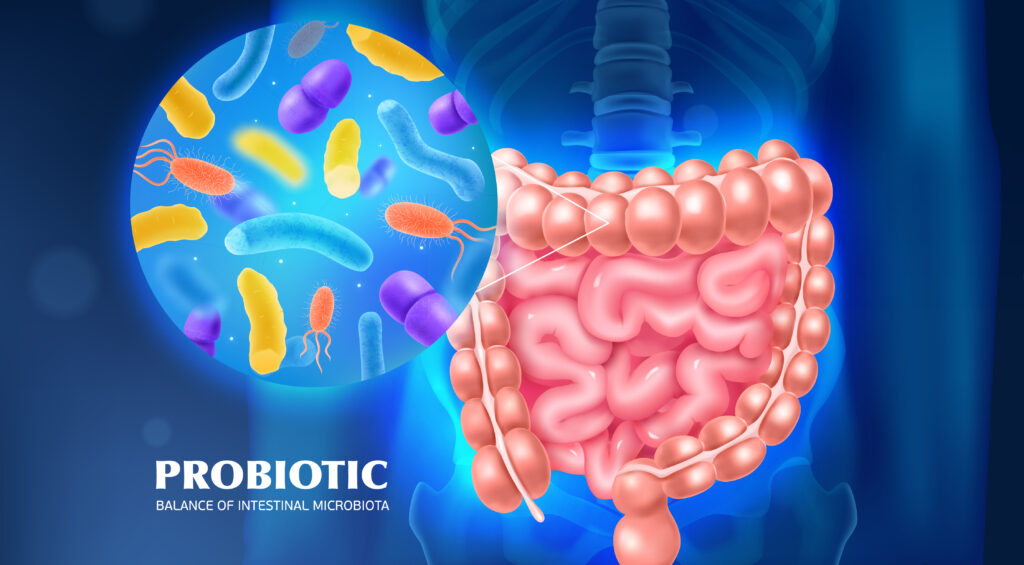
Probiotics are among the most widely consumed dietary supplements globally, promoted for gut health, immunity, metabolic balance, mental well-being, and even skin health.
Despite strong consumer demand and an expanding global market, clinical outcomes remain inconsistent, and a significant proportion of users report little to no benefit.
This disconnect between marketing claims and real-world effectiveness is not accidental. It reflects fundamental scientific limitations related to strain specificity, host-microbiome interactions, gastrointestinal survival, product quality, and inappropriate clinical use.
1. Incorrect Strain or Dosage for the Condition
Probiotics Are Strain-Specific, Not Species-Specific
One of the most critical and misunderstood facts in probiotic science is that health benefits are strain-specific, not species-wide. For example, Lactobacillus rhamnosus GG may reduce antibiotic-associated diarrhea, while another L. rhamnosus strain may show no benefit at all.
Many commercial products list only the genus and species, omitting the strain designation. From a scientific perspective, this is equivalent to prescribing medication without specifying the active molecule.
However, probiotics are often marketed for vague indications such as “gut health,” “detox,” or “immunity,” without strain-specific validation. When the selected strain has no documented efficacy for the target condition, failure is expected.
Dosage Matters More Than Consumers Realize
Even when the correct strain is chosen, subtherapeutic dosing can render a probiotic ineffective. Clinical trials typically use doses ranging from 1 billion to over 100 billion CFU per day, depending on strains and indication.
Many over-the-counter products fail to match clinically effective doses, especially after accounting for loss of viability during storage.

2. Failure to Survive Stomach Acid and Bile
The Gastrointestinal Tract Is a Hostile Environment
The human digestive system is designed to destroy microbes, not protect them. Key barriers include:
- Gastric acid (pH 1.5-3.0)
- Digestive enzymes
- Bile salts in the small intestine
Most probiotic bacteria are not naturally adapted to survive these conditions.
Viability at Ingestion ≠ Viability at the Gut
Label claims often state CFU counts “at time of manufacture,” not at the time of consumption or after gastric transit. Research studies show that a large proportion of probiotic organisms die before reaching the intestine, particularly in non-encapsulated formulations.
Delivery Technology Is Often Inadequate
Advanced delivery systems such as enteric coating, microencapsulation, or spore-forming strains can improve survival. However, many commercial probiotics rely on standard capsules that offer minimal protection.
3. Failure to Colonize the Gut
Temporary Presence Does Not Equal Colonization
Contrary to popular belief, most probiotics do not permanently colonize the gut. Instead, they transiently pass through the gastrointestinal tract.
While temporary activity can still exert effects (e.g., immune signaling, metabolite production), many consumers expect probiotics to “reseed” their microbiome an expectation unsupported by evidence for most strains.
The Established Microbiome Is Highly Competitive
The adult gut microbiome contains trillions of microbes organized into stable ecological networks. Incoming probiotic strains face intense competition for nutrients and attachment sites.
In many individuals, the existing microbiota simply outcompetes and eliminates the introduced organisms.
Colonization Depends on Host Factors
Colonization success varies widely and depends on:
- Baseline microbiome composition
- Diet and fiber intake
- Mucosal immunity
- Antibiotic history
This variability explains why the same probiotic may help one person and do nothing for another.
4. Individual “Resistance”: The Personalized Microbiome Effect
One Microbiome, One Response
Human microbiomes are highly individualized often described as a microbial fingerprint. Research increasingly shows that probiotic response is person-specific, not universal.
Some individuals are “permissive,” allowing probiotic strains to transiently integrate. Others are “resistant,” showing minimal microbial or functional change after supplementation.
Probiotics Can Delay Natural Recovery
In post-antibiotic settings, studies have shown that probiotics may delay the natural restoration of native gut microbiota in certain individuals, compared to spontaneous recovery.
This challenges the assumption that probiotics are always beneficial following antibiotic use.
Toward Precision Probiotics
The future of probiotic therapy lies in personalized microbiome-guided interventions, rather than one-size-fits-all formulations. Current retail products rarely account for this complexity.
5. Poor Product Quality and Mislabeling
Quality Control Is Highly Variable
Unlike pharmaceutical drugs, probiotics are regulated as dietary supplements in many countries. This results in:
- Inconsistent manufacturing standards
- Inaccurate labeling
- Variable strain viability
Lack of Clinical Validation
Only a small fraction of probiotic products on the market are backed by robust human clinical trials. Marketing language often extrapolates benefits from unrelated strains or in vitro studies.
A Note on Post-Antibiotic Use
Antibiotics dramatically alter gut microbial ecosystems. While probiotics are commonly recommended afterwards, evidence suggests outcomes depend on timing, strain selection, and host response.
In some cases, allowing natural microbiome recovery supported by diet and prebiotic fibers may be more effective than immediate probiotic supplementation.
Emerging approaches, such as autologous microbiome restoration, highlight the limitations of generic probiotic strategies.
Key Takeaway: Why Most Probiotics Fail
Most probiotics do not work, not because the concept is flawed, but because biological reality is far more complex than marketing narratives.
The Core Reasons Summarized
- Probiotic effects are strain-specific and condition-specific
- Many products fail to survive digestion
- Long-term colonization is rare
- Individual microbiomes strongly influence response
- Quality and labeling inconsistencies are widespread
- In certain conditions, probiotics may do harm
The Future of Probiotics
Effective probiotic therapy requires:
- Clinically validated strains
- Appropriate dosing and delivery systems
- Personalization based on microbiome science
- Strong regulatory oversight and transparency
Until these standards are widely adopted, most commercial probiotics will continue to underperform, leaving consumers confused and clinicians cautious.