

Vitamin B12 is a cobalt-containing compound belonging to the cobalamin family, which includes methylcobalamin, adenosylcobalamin, hydroxocobalamin, and cyanocobalamin.
It is essential water-soluble vitamin required for neurological function, red blood cell formation, and DNA synthesis. Despite its critical biological role, vitamin B12 deficiency remains highly prevalent worldwide, especially among vegetarians, older adults, pregnant women, and individuals with malabsorption disorders.
O’Leary and Samman, described in Nature Reviews Disease Primers journal, stated that vitamin B12 as a coenzyme involved in two critical metabolic reactions: the conversion of homocysteine to methionine and the conversion of methylmalonyl-CoA to succinyl-CoA. These reactions are vital for DNA synthesis, myelin formation, and cellular energy metabolism.
Unlike most vitamins, vitamin B12 is not synthesized by plants or animals but by specific microorganisms. Humans rely entirely on dietary intake and efficient gastrointestinal absorption to maintain adequate B12 status.
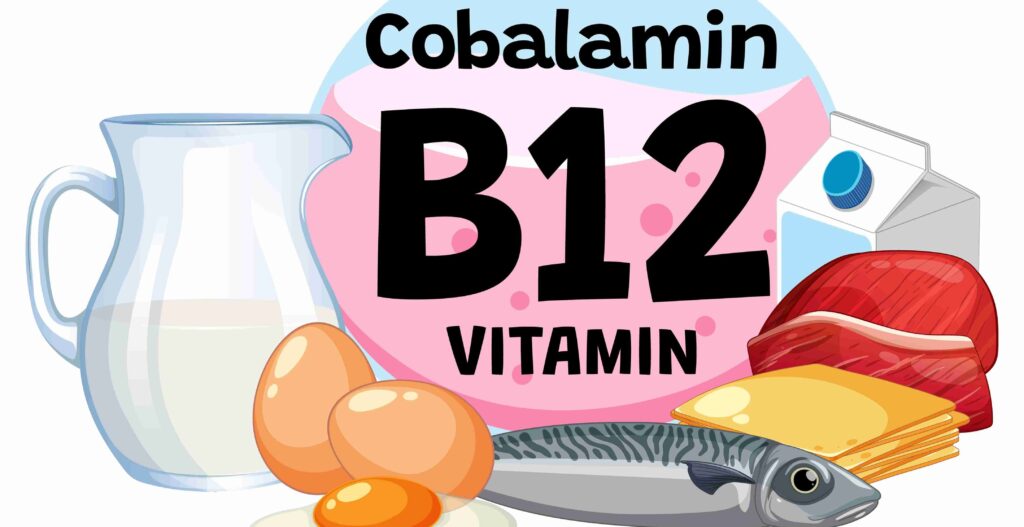
Why Do You Need Vitamin B12?
Vitamin B12 is indispensable for multiple physiological systems that sustain human health, growth, and neurological integrity. Its biological importance lies in its role as a coenzyme in critical metabolic pathways that govern blood formation, nervous system function, and cellular replication. Deficiency, even at subclinical levels, can disrupt these processes and lead to progressive, sometimes irreversible, health consequences.
1. Red Blood Cell Formation and Oxygen Transport
The Journal of the American Medical Association (JAMA) reports that vitamin B12 is essential for erythropoiesis, the process by which red blood cells are produced in the bone marrow. Vitamin B12 is required for proper DNA synthesis during red blood cell maturation. When B12 levels are inadequate, DNA replication becomes defective, causing delayed nuclear maturation while cytoplasmic growth continues. This imbalance leads to the formation of abnormally large, immature red blood cells known as megaloblasts.
These dysfunctional red blood cells have a shortened lifespan and reduced capacity to transport oxygen efficiently, resulting in megaloblastic anemia. Clinically, this manifests as fatigue, weakness, shortness of breath, dizziness, and reduced exercise tolerance. Over time, chronic anemia places additional strain on the cardiovascular system, particularly in older adults and individuals with preexisting heart disease.

2. Neurological Function and Cognitive Health
The Lancet Neurology highlights that vitamin B12 plays a fundamental role in maintaining the structural and functional integrity of the nervous system. Vitamin B12 is essential for the synthesis and maintenance of myelin, the protective fatty sheath that insulates nerve fibers and enables rapid transmission of electrical signals.
In vitamin B12 deficiency, impaired myelin synthesis leads to progressive demyelination of peripheral nerves, the spinal cord, and the brain. This results in neurological manifestations such as numbness, tingling, burning sensations in the extremities, muscle weakness, gait instability, and loss of coordination. Cognitive symptoms may include memory impairment, difficulty concentrating, mood disturbances, depression, and in advanced cases, dementia-like syndromes.
Crucially, The Lancet Neurology emphasizes that neurological damage due to prolonged B12 deficiency may become irreversible if not corrected early, even when hematological parameters appear normal. This underscores the importance of early detection and adequate intake, particularly in older adults and vegetarians.
2. DNA Synthesis and Cellular Division
Clinical Nutrition explains that vitamin B12 works synergistically with folate in one-carbon metabolism, a biochemical pathway central to DNA synthesis, methylation reactions, and cellular division. Vitamin B12 acts as a cofactor for methionine synthase, an enzyme that converts homocysteine to methionine, a precursor for S-adenosylmethionine (SAM), the body’s universal methyl donor.
Disruption of this pathway due to vitamin B12 deficiency leads to impaired DNA replication and defective cell division, particularly affecting rapidly dividing tissues such as bone marrow, gastrointestinal epithelium, and developing fetal tissues. Elevated homocysteine levels resulting from impaired B12-dependent metabolism are also associated with endothelial dysfunction and increased cardiovascular risk.
Furthermore, during pregnancy and early development, inadequate vitamin B12 availability can impair fetal neural development and increase the risk of neurodevelopmental abnormalities, highlighting its importance across the life course.

Why Are Vitamin B12 Supplements Suggested to Vegetarian People?
Dietary Absence in Plant Foods
Pawlak and coauthors reported in the American Journal of Clinical Nutrition that unfortified plant-based diets contain virtually no biologically active vitamin B12. This places vegetarians and vegans at a significantly higher risk of deficiency.
High Prevalence in Indian Vegetarian Populations
According to Chakrabarti and coauthors, over 50-70% of Indian vegetarians exhibit biochemical vitamin B12 deficiency, largely due to dietary patterns that exclude animal products. This study was reported in The Lancet Global Health.
Functional Deficiency Despite Adequate Intake
MDPI Nutrients explains that even individuals consuming small amounts of dairy may fail to meet requirements due to poor absorption, gastrointestinal disorders, or age-related decline in intrinsic factor secretion.
As a result, supplementation is widely recommended for vegetarians, pregnant women, and elderly populations in India.
RDA Values of Vitamin B12
The Recommended Dietary Allowance (RDA) for vitamin B12 is based on maintaining normal hematological status and serum B12 concentrations.
The National Institutes of Health (NIH) and WHO-aligned data provide the following life-stage-specific recommendations:
| Life Stage | Recommended Amount |
| Birth to 6 months | 0.4 mcg |
| Infants 7-12 months | 0.5 mcg |
| Children 1-3 years | 0.9 mcg |
| Children 4-8 years | 1.2 mcg |
| Children 9-13 years | 1.8 mcg |
| Teens 14-18 years | 2.4 mcg |
| Adults | 2.4 mcg |
| Pregnant teens and women | 2.6 mcg |
| Breastfeeding teens and women | 2.8 mcg |
The New England Journal of Medicine emphasizes that higher intakes may be required in individuals with malabsorption, pernicious anemia, or chronic gastrointestinal disease.
What Foods Provide Vitamin B12?
Animal-Based Natural Sources
Allen and Dror, who published an article in the Journal of Oxford Academic Nutrition Reviews, reported the richest natural sources of vitamin B12 as:
- Liver and organ meats
- Fish (salmon, sardines, tuna)
- Eggs
- Milk, yogurt, and cheese
These foods provide highly bioavailable vitamin B12 bound to protein, which is released during digestion.
Fortified Foods
MDPI Nutrients reports that fortified cereals, plant-based milks, and nutritional yeast can provide synthetic vitamin B12 (cyanocobalamin), making them valuable sources for vegetarians.
However, reliance on fortified foods alone may be inconsistent, reinforcing the role of supplements.
What Happens If I Don’t Get Enough Vitamin B12?
1. Hematological Consequences
Author Stabler reported in the Journal of the American Medical Association that vitamin B12 deficiency as a leading cause of megaloblastic anemia, presenting with fatigue, pallor, breathlessness, and reduced exercise tolerance.
2. Neurological and Psychiatric Effects
Author Reynolds reported in The Lancet Neurology that prolonged deficiency leads to peripheral neuropathy, gait instability, depression, cognitive decline, and dementia-like symptoms.
3. Pregnancy and Infant Health Risks
The American Journal of Obstetrics and Gynecology shows that maternal B12 deficiency is associated with neural tube defects, low birth weight, and impaired neurodevelopment in infants.
What Are Some Effects of Vitamin B12 on Health?
Cardiovascular Health
The New England Journal of Medicine reports that vitamin B12 lowers homocysteine levels, a biomarker associated with cardiovascular disease risk, though direct causality remains under investigation.
Energy Metabolism and Fatigue Reduction
The Journal of Clinical Nutrition confirms that vitamin B12 plays a central role in mitochondrial energy production, explaining why deficiency commonly presents as chronic fatigue and weakness.
Cognitive Aging and Brain Health
Journal of Nature Reviews Neurology links adequate B12 status with reduced brain atrophy and slower cognitive decline in older adults.
What Kinds of Vitamin B12 Dietary Supplements Are Available in the Indian Market?
Cyanocobalamin
Methylcobalamin
Hydroxocobalamin and Injections
Summary
Vitamin B12 is an indispensable micronutrient essential for blood formation, neurological integrity, DNA synthesis, and metabolic health. Evidence from research confirms that deficiency remains widespread, particularly among vegetarians, older adults, and pregnant women in India.
While the RDA for adults is 2.4 mcg per day, real-world requirements may be higher due to absorption variability and lifestyle factors. Dietary sources alone are often insufficient, making supplementation a safe, effective, and evidence-based strategy for prevention.
Ensuring adequate vitamin B12 intake is not merely a nutritional concern it is a cornerstone of public health, cognitive longevity, and metabolic resilience.