

GINGER (Zingiber officinale) has transitioned from a traditional remedy to a scientifically validated nutraceutical with anti-inflammatory, analgesic, and immunomodulatory properties. In modern clinical and sports nutrition contexts, ginger is commonly consumed either as capsules (standardized extracts or powders) or as ginger tea (fresh or dried rhizome infusions).
Understanding Ginger’s Bioactive Compounds and Mechanisms of Action
Therapeutic activity potential of Ginger is is driven by phenolic compounds, notably gingerols, shogaols, paradols, and zingerone. These molecules exert anti-inflammatory and analgesic effects by inhibiting cyclooxygenase (COX-1 and COX-2) and lipoxygenase pathways, thereby reducing prostaglandin and leukotriene synthesis. Elsevier-hosted molecular biology studies further show that ginger downregulates nuclear factor kappa B (NF-κB) signaling, a central regulator of inflammatory cytokines such as TNF-α, IL-1β, and IL-6.
1. Reduces Muscle Pain and Exercise-Induced Soreness
The Journal of Pain (Elsevier), in a randomized controlled trial by Black and coauthors, reported that daily supplementation with 2 g of ginger powder significantly reduced delayed-onset muscle soreness (DOMS) following eccentric exercise. The authors attributed this effect to systemic suppression of inflammatory mediators.
MDPI-published sports medicine trials further demonstrate that ginger capsules produce more consistent reductions in muscle pain intensity compared to ginger tea, largely due to standardized dosing. Tea, however, may still be beneficial for mild soreness or for individuals sensitive to concentrated supplements.
Capsule advantage: Stronger evidence for DOMS reduction due to higher and consistent gingerol delivery.
2. Relieves Period Pain (Primary Dysmenorrhea)
The Journal of Obstetrics and Gynaecology Research, in studies led by Ozgoli and coauthors, showed that ginger capsules (750-2000 mg/day) were as effective as nonsteroidal anti-inflammatory drugs (NSAIDs) such as ibuprofen in reducing menstrual pain. The mechanism involves prostaglandin inhibition in the uterus tissues.
Ginger tea also alleviates menstrual discomfort, particularly when consumed during the first days of menstruation. However, variability in ginger concentration limits reproducibility.
Capsule advantage: Comparable efficacy to NSAIDs in clinical trials.

3. Reduces Inflammation and Oxidative Stress
The Journal of Nutrition (Oxford University Press), through controlled human trials by Mashhadi et al., reported that ginger supplementation significantly reduced serum C-reactive protein (CRP) and malondialdehyde levels. Capsules demonstrated more pronounced effects than dietary ginger forms.
Nature Reviews Immunology highlights that ginger’s antioxidant activity complements its anti-inflammatory action by scavenging reactive oxygen species and enhancing endogenous antioxidant enzymes such as superoxide dismutase.
Capsule advantage: Greater systemic anti-inflammatory impact.
4. Strengthens the Immune System
MDPI-published immunology studies indicate that ginger modulates both innate and adaptive immunity by enhancing macrophage activity and regulating T-cell responses. Ginger tea, often consumed during respiratory infections, provides symptomatic relief through warming, hydration, and mild antimicrobial effects.
Elsevier Clinical Nutrition Reviews conclude that while capsules are better suited for long-term immune modulation, tea remains valuable for acute immune support and gastrointestinal comfort.

5. Ginger and Osteoarthritis
Arthritis & Rheumatism, in a landmark randomized trial by Altman and Marcussen, demonstrated that standardized ginger extract significantly reduced knee osteoarthritis pain and disability compared to placebo. The study emphasized consistent dosing as a key factor.
Springer rheumatology texts also report improvements in joint stiffness and mobility with ginger supplementation over 12 weeks. Ginger tea may support symptom relief but lacks the robust clinical backing seen with capsules.
Capsule advantage: Strong clinical evidence in osteoarthritis management.
6. Ginger and Rheumatoid Arthritis
MDPI and Elsevier-hosted inflammatory disease studies reveal that ginger suppresses pro-inflammatory cytokines implicated in rheumatoid arthritis pathogenesis. A Journal of Medicinal Food trial reported reductions in TNF-α and IL-1β following ginger supplementation.
However, The Lancet and New England Journal of Medicine emphasize that ginger should be considered an adjunct, not a replacement, for disease-modifying antirheumatic drugs (DMARDs). Capsules provide more reliable systemic exposure than tea in this context.
Ginger Capsules vs Ginger Tea: Key Differences
Ginger Capsules
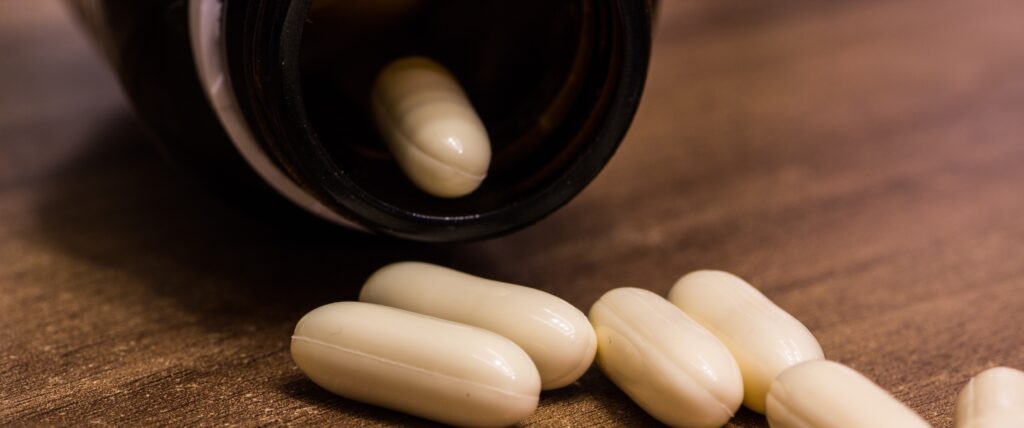
Wiley Pharmaceutical Sciences reviews report that ginger capsules typically contain standardized extracts or dried powders with quantified gingerol content (often 5-10%). Encapsulation protects bioactives from degradation and allows for consistent dosing. Some formulations also use enhanced delivery technologies, such as micronization or lipid carriers, to improve absorption.
Ginger Tea
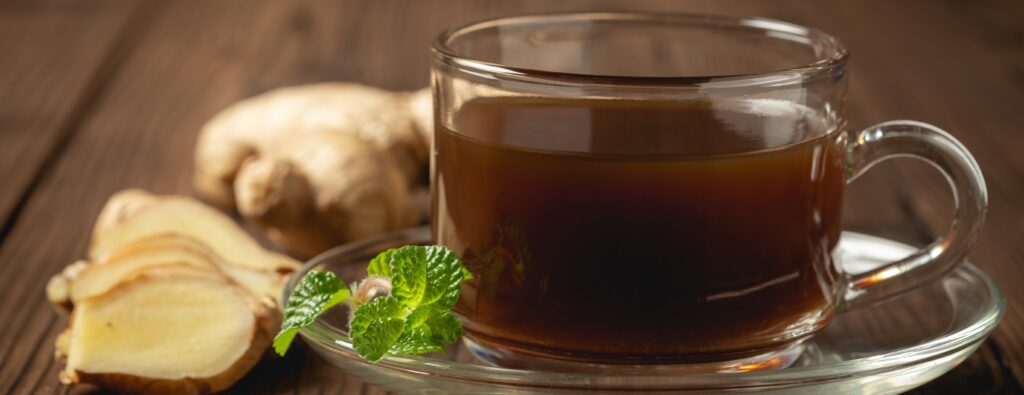
Oxford University Press nutrition studies describe ginger tea as an aqueous infusion of fresh or dried ginger. While tea delivers lower absolute concentrations of gingerols compared to capsules, it provides rapid gastric absorption and additional hydration benefits. However, heat processing converts gingerols into shogaols, which may alter but not necessarily reduce biological activity.
From a clinical standpoint, capsules favor precision and potency, whereas tea offers gentler, food-based exposure.
Dosage: How Much Ginger Is Effective?
Ginger Capsules
- Muscle pain & inflammation: 1-2 g/day
- Period pain: 750-2000 mg/day (divided doses)
- Osteoarthritis & RA: 1-2 g/day standardized extract
Ginger Tea
- 1-2 g fresh ginger per cup
- 2-3 cups daily for general benefits
The Journal of American Medical Association-integrated reviews caution that doses above 4 g/day may increase the risk of gastrointestinal discomfort or interact with anticoagulant medications.
Safety, Tolerability, and Industry Perspective
Elsevier pharmacovigilance reports classify ginger as generally recognized as safe (GRAS). The nutraceutical industry increasingly favors capsules due to standardization, traceability, and regulatory compliance, while tea remains popular in functional food and wellness markets.
Bottom Line
Based on current scientific evidence, ginger capsules are more effective for muscle pain, soreness, osteoarthritis, and rheumatoid arthritis due to standardized dosing and higher bioactive delivery. Ginger tea remains a valuable, gentle option for mild pain, menstrual discomfort, immune support, and daily wellness.
For clinical, sports, and nutraceutical applications requiring reproducible outcomes, capsules are the preferred format. For lifestyle and preventive use, ginger tea offers accessibility and comfort with supportive benefits.