

Gallbladder stones, also known as gallstones or cholelithiasis, are one of the most common digestive disorders worldwide. These hardened deposits form within the gallbladder, a small organ located beneath the liver that stores and concentrates bile. While many people with gallstones remain symptom-free, others may experience severe abdominal pain, nausea, inflammation, and potentially serious complications. Advances in medical imaging and minimally invasive surgery have made gallstone diagnosis and treatment highly effective. Understanding the causes, symptoms, prevention strategies, and treatment options can help reduce the risk of complications and improve long-term digestive health.
What Are Gallbladder Stones?
Gallstones are solid particles that develop when substances in bile, such as cholesterol, bilirubin, and bile salts, become imbalanced and crystallize. Over time, these crystals may enlarge and form stones ranging from tiny grains to several centimeters in size.
The two major types of gallstones are:
- Cholesterol stones, which account for approximately 80–90% of gallstones in developed countries.
- Pigment stones, composed mainly of bilirubin and commonly associated with liver disease, hemolytic disorders, or biliary infections.
Gallstone formation is influenced by several factors including obesity, rapid weight loss, diabetes, advancing age, female sex, pregnancy, family history, and certain dietary patterns. According to research published in The Lancet, gallstones affect approximately 10-20% of adults globally, although many cases remain asymptomatic (Lammert et al., 2016).
Symptoms of Gallbladder Stones
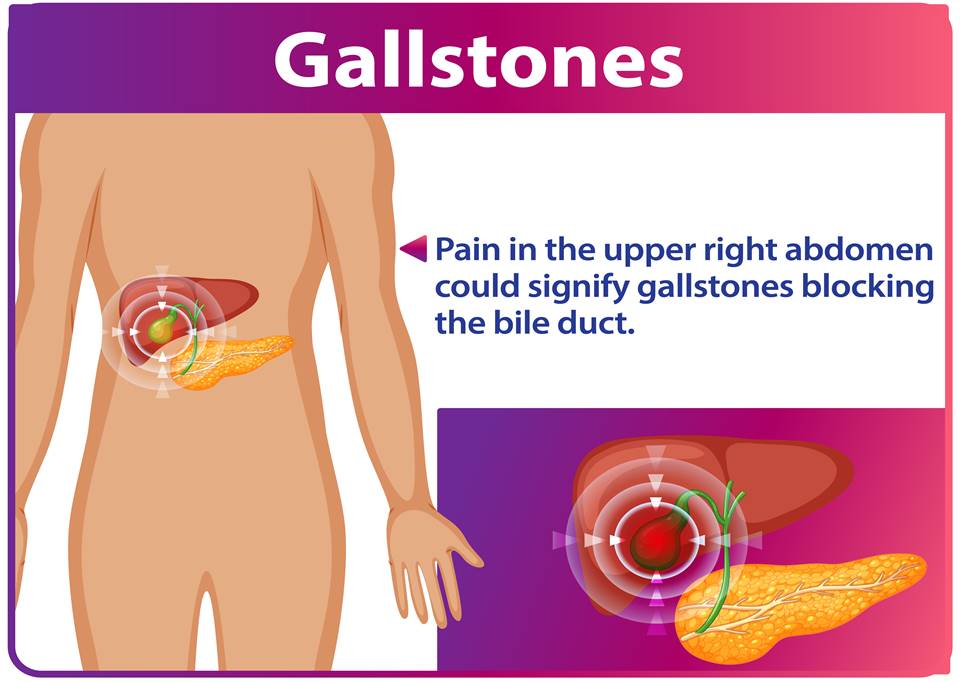
Many gallstones do not cause symptoms and are discovered incidentally during imaging studies. However, when stones block the cystic duct or bile ducts, symptoms can develop suddenly.
Common symptoms include:
- Pain in the upper right abdomen
- Pain in the center of the upper abdomen
- Pain that may radiate to the back or right shoulder
- Nausea and vomiting
- Indigestion after fatty meals
- Abdominal bloating
- Excessive belching
- Feeling of fullness after eating
The classic symptom is biliary colic, characterized by sudden, intense pain that typically occurs after consuming fatty foods and may last from 30 minutes to several hours.
Complicated gallstone disease may lead to:
- Acute cholecystitis (gallbladder inflammation)
- Choledocholithiasis (stones in the common bile duct)
- Cholangitis (bile duct infection)
- Gallstone pancreatitis
Clinical guidelines from the American College of Gastroenterology emphasize that symptomatic gallstones significantly increase the risk of recurrent pain and complications if left untreated (Tenner et al., 2013).
How to Diagnose Gallbladder Stones
Accurate diagnosis is essential for determining the severity of gallstone disease and selecting the most appropriate treatment approach.
Medical History and Physical Examination
Doctors evaluate symptoms, pain patterns, risk factors, and previous digestive disorders. Tenderness in the upper right abdomen may suggest gallbladder inflammation.
Blood Tests
Blood investigations may help identify:
- Infection
- Liver dysfunction
- Bile duct obstruction
- Pancreatitis
Common laboratory markers include liver enzymes, bilirubin, white blood cell count, and pancreatic enzymes.
Ultrasound Examination
Abdominal ultrasound is the preferred first-line diagnostic tool because it is safe, non-invasive, and highly accurate.
Studies have reported ultrasound sensitivity exceeding 95% for detecting gallstones larger than 2 mm (European Association for the Study of the Liver [EASL]).
Advanced Imaging
When bile duct stones are suspected, physicians may recommend:
- Magnetic Resonance Cholangiopancreatography (MRCP)
- Endoscopic Ultrasound (EUS)
- Computed Tomography (CT)
These techniques help identify complications and guide treatment decisions.
How to Prevent Gallbladder Stone Formation
Although not all gallstones can be prevented, scientific evidence suggests that several lifestyle modifications may reduce the risk of stone formation.
Maintain a Healthy Body Weight
Obesity is one of the strongest risk factors for cholesterol gallstones. Excess body fat increases cholesterol secretion into bile, promoting stone formation.
Large prospective studies from the Nurses’ Health Study demonstrated that maintaining a healthy body weight significantly lowers gallstone risk (Tsai et al., 2004).

Avoid Rapid Weight Loss
Rapid weight loss increases cholesterol release from body fat stores and reduces gallbladder emptying, increasing the likelihood of stone formation.
Clinical studies have shown that individuals undergoing very-low-calorie diets or bariatric surgery face an increased risk of developing gallstones (Shiffman et al., 1991).
Consume a Balanced Diet
A healthy dietary pattern may help reduce gallstone risk.
Beneficial dietary habits include:
- Adequate intake of fruits and vegetables
- Whole grains
- Moderate amounts of healthy fats
- Fiber-rich foods
- Limited intake of refined carbohydrates
Research suggests that higher dietary fiber intake is associated with a lower risk of gallstone disease (Cuevas et al., 2004).
Engage in Regular Physical Activity
Regular exercise improves metabolic health and may reduce gallstone formation.
A prospective study involving thousands of participants found that physically active individuals had a lower incidence of symptomatic gallstones compared with sedentary individuals (Leitzmann et al., 1999).
Control Diabetes and Metabolic Syndrome
Insulin resistance and type 2 diabetes increase gallstone risk by altering cholesterol metabolism and gallbladder function.
Proper management of blood sugar and body weight may help lower the likelihood of gallstone formation.
How to Remove Gallbladder Stones
Treatment depends on symptoms, stone size, complications, and overall health status.
Observation for Asymptomatic Gallstones
Most individuals with asymptomatic gallstones do not require immediate treatment.
Clinical guidelines recommend watchful waiting because only a small percentage of asymptomatic patients develop symptoms annually (EASL).
Medications
Certain cholesterol gallstones may be treated with ursodeoxycholic acid (UDCA), which gradually dissolves cholesterol stones.
However, medication therapy has limitations:
- Treatment may take months to years
- Stones may recur after discontinuation
- Effectiveness is limited to selected patients
A systematic review found that UDCA can dissolve small cholesterol stones in appropriately selected cases, although recurrence remains common (Portincasa et al., 2006).
Laparoscopic Cholecystectomy
Laparoscopic gallbladder removal is considered the gold standard treatment for symptomatic gallstones.
Benefits include:
- High success rate
- Short hospital stay
- Reduced postoperative pain
- Faster recovery
The Society of American Gastrointestinal and Endoscopic Surgeons recommends laparoscopic cholecystectomy as the preferred treatment for symptomatic gallstone disease.
Endoscopic Removal of Bile Duct Stones
When stones migrate into the common bile duct, a procedure known as Endoscopic Retrograde Cholangiopancreatography (ERCP) may be performed.
ERCP allows physicians to:
- Locate bile duct stones
- Remove stones
- Relieve bile duct obstruction
This approach is particularly important in patients with cholangitis or pancreatitis caused by gallstones.
When to Seek a Doctor
Immediate medical evaluation is necessary if any of the following symptoms occur:
- Severe abdominal pain lasting more than a few hours
- Fever or chills
- Yellowing of the skin or eyes (jaundice)
- Persistent nausea or vomiting
- Dark urine
- Pale-colored stools
- Signs of pancreatitis, such as severe upper abdominal pain radiating to the back
Delaying treatment may increase the risk of serious complications including gallbladder infection, bile duct obstruction, pancreatitis, and sepsis.
Individuals with recurrent digestive symptoms after meals should also consult a healthcare professional for appropriate evaluation.
Bottom Line
Gallbladder stones are a common digestive condition that can range from silent, asymptomatic disease to painful and potentially serious complications. Most gallstones form when cholesterol or bilirubin crystallizes within bile. Ultrasound remains the preferred diagnostic tool, while lifestyle measures such as maintaining a healthy weight, consuming a balanced diet, avoiding rapid weight loss, and staying physically active may help reduce risk. Symptomatic gallstones are most effectively treated with laparoscopic cholecystectomy, while ERCP plays an important role in managing bile duct stones. Early diagnosis and timely medical care can help prevent complications and improve long-term digestive health.
References
- Lammert F, Gurusamy K, Ko CW, et al. Gallstones. Nature Reviews Disease Primers. 2016;2:16024.
- European Association for the Study of the Liver (EASL). Clinical Practice Guidelines on the Prevention, Diagnosis and Treatment of Gallstones. Journal of Hepatology. 2016;65(1):146-181.
- Tsai CJ, Leitzmann MF, Willett WC, Giovannucci EL. Prospective study of abdominal adiposity and gallstone disease in US men. American Journal of Clinical Nutrition. 2004;80(1):38-44.
- Shiffman ML, Sugerman HJ, Kellum JM, Brewer WH, Moore EW. Gallstones in patients undergoing rapid weight loss. American Journal of Gastroenterology. 1991;86(8):1000-1005.
- Cuevas A, Miquel JF, Reyes MS, Zanlungo S, Nervi F. Diet as a risk factor for cholesterol gallstone disease. Journal of the American College of Nutrition. 2004;23(3):187-196.
- Leitzmann MF, Rimm EB, Willett WC, Spiegelman D, Grodstein F, Stampfer MJ. Recreational physical activity and the risk of cholecystectomy in women. New England Journal of Medicine. 1999;341(11):777-784.
- Portincasa P, Moschetta A, Palasciano G. Cholesterol gallstone disease. Lancet. 2006;368(9531):230-239.
- Tenner S, Baillie J, DeWitt J, Vege SS. American College of Gastroenterology Guideline: Management of Acute Pancreatitis. American Journal of Gastroenterology. 2013;108(9):1400-1415.