

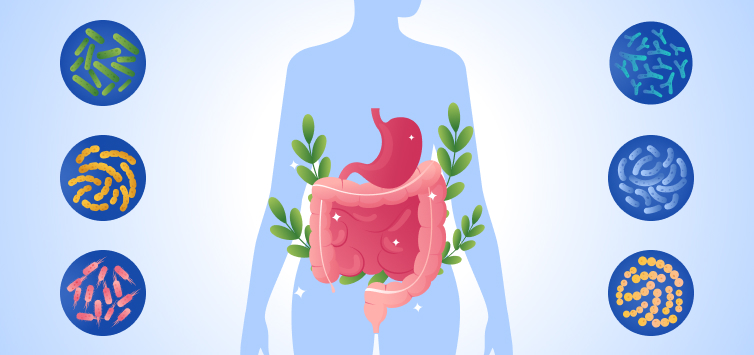
What Is Gut Health?
Gut health refers to the proper functioning of the gastrointestinal tract, including efficient digestion, nutrient absorption, immune regulation, and maintenance of a balanced microbial environment. A healthy gut is characterized by an intact intestinal barrier, low levels of inflammation, effective digestion, and a diverse population of beneficial microorganisms.
The gastrointestinal tract houses trillions of microbes, including bacteria, fungi, viruses, and other microorganisms that interact continuously with the body’s immune and metabolic systems. These microorganisms help digest dietary fibers, produce vitamins, generate beneficial metabolites such as short-chain fatty acids (SCFAs), and support immune function (Valdes et al., 2018).
When gut function is impaired or the microbial ecosystem becomes imbalanced, digestive symptoms and broader health concerns may arise.
What Is the Gut Microbiome?
The gut microbiome refers to the collection of microorganisms and their genetic material residing in the digestive tract. The human gut contains approximately 100 trillion microbial cells, with the majority located in the large intestine (Sender et al., 2016).
The gut microbiome performs several essential functions, including:
- Fermentation of dietary fiber
- Production of short-chain fatty acids such as butyrate
- Synthesis of vitamins including vitamin K and certain B vitamins
- Regulation of immune responses
- Protection against harmful pathogens
- Maintenance of intestinal barrier integrity
Scientific studies have shown that microbial diversity is often associated with better health outcomes. Individuals with reduced microbial diversity may be more susceptible to inflammatory bowel disease, obesity, metabolic disorders, and certain gastrointestinal conditions (Lloyd-Price et al., 2019).
The composition of the microbiome is influenced by diet, age, genetics, medications, stress, sleep patterns, and environmental factors. Among these, diet appears to be one of the strongest modulators of gut microbial diversity.

Why Is Gut Health Important?
The importance of gut health extends far beyond digestion. Scientists increasingly recognize the gut as a central hub that communicates with multiple organ systems.
1. Supports Digestive Function
The gut microbiome assists in breaking down complex carbohydrates and fibers that human digestive enzymes cannot process. This fermentation process produces beneficial short-chain fatty acids, including butyrate, which serve as an energy source for colon cells and help maintain intestinal health (Makki et al., 2018).
2. Strengthens Immune Health
Approximately 70% of the body’s immune cells reside in the gastrointestinal tract. Beneficial gut bacteria help train the immune system to distinguish between harmful pathogens and harmless substances. Disruptions in microbial balance may contribute to inappropriate immune responses and inflammation (Belkaid & Hand, 2014).
3. Influences Metabolic Health
Research suggests that gut microbes play a role in energy metabolism, insulin sensitivity, and body weight regulation. Alterations in microbiome composition have been associated with obesity, metabolic syndrome, and type 2 diabetes (Tilg et al., 2020).
4. Supports Mental Well-Being
The gut and brain communicate through the gut-brain axis, a bidirectional network involving neural, hormonal, and immune pathways. Certain gut bacteria produce neurotransmitters and metabolites that may influence mood and cognitive function. Clinical evidence suggests that microbiome alterations may be associated with anxiety and depression (Cryan et al., 2019).
5. Maintains Intestinal Barrier Integrity
The intestinal lining acts as a protective barrier that prevents harmful substances from entering the bloodstream. Beneficial microbes help strengthen this barrier and reduce excessive intestinal permeability. Impaired barrier function has been implicated in various inflammatory conditions (Bischoff et al., 2014).

Signs of an Unhealthy Gut
An unhealthy gut can manifest through a variety of digestive and non-digestive symptoms. While these signs do not always indicate microbiome imbalance, persistent symptoms warrant attention.
Frequent Digestive Discomfort: Bloating, excessive gas, abdominal discomfort, diarrhea, constipation, and irregular bowel habits are among the most common indicators of gut dysfunction.
Food Intolerances: Difficulty digesting certain foods may sometimes be associated with changes in gut microbial composition and intestinal function.
Recurrent Infections: Because the gut plays a major role in immune regulation, microbial imbalance may contribute to increased susceptibility to infections.
Chronic Fatigue: Emerging evidence suggests that gut inflammation and microbiome alterations may contribute to fatigue and reduced energy levels in some individuals.
Unexplained Weight Changes: Significant weight gain or weight loss without obvious dietary changes may occasionally be associated with alterations in gut microbial metabolism.
Skin Problems: Research has identified links between gut health and skin conditions such as acne, eczema, and rosacea through what is often referred to as the gut-skin axis (Mahmud et al., 2022).
Mood Disturbances: Anxiety, stress, irritability, and depressive symptoms have been associated with disruptions in the gut microbiome and gut-brain communication pathways.
Increased Inflammation: Chronic low-grade inflammation has been linked to gut microbial imbalances and may contribute to metabolic and inflammatory disorders.
Can Probiotic Supplements Be Good for Gut Health?
Probiotics are live microorganisms that, when administered in adequate amounts, confer a health benefit on the host (Hill et al., 2014). Common probiotic strains include species of Lactobacillus, Bifidobacterium, Saccharomyces, and Bacillus.
Scientific evidence suggests that certain probiotic supplements may support gut health under specific circumstances.
Probiotics and Antibiotic-Associated Diarrhea
One of the most well-established probiotic applications is the prevention of antibiotic-associated diarrhea. A large systematic review found that probiotics significantly reduced the risk of diarrhea during antibiotic treatment (Goldenberg et al., 2017).
Irritable Bowel Syndrome (IBS)
Several clinical trials have demonstrated that specific probiotic strains may help reduce symptoms such as bloating, abdominal pain, and altered bowel habits in individuals with IBS. However, benefits vary depending on the strain used (Ford et al., 2018).
Gut Microbiome Support
Probiotics may help restore microbial balance following disruptions caused by antibiotics, infections, or dietary changes. Some studies have reported improvements in microbiome diversity and gut barrier function with targeted probiotic supplementation.
Immune Support
Certain probiotic strains have been associated with modest improvements in immune function and reductions in the incidence or duration of some upper respiratory tract infections (Hao et al., 2015).
Limitations of Probiotics
Despite promising findings, probiotics are not a universal solution. Their effects are often strain-specific, and not all products have the same level of scientific support. Furthermore, individual responses vary depending on existing microbiome composition, health status, and lifestyle factors.
Current evidence suggests that probiotics work best as part of a broader gut health strategy that includes a fiber-rich diet, regular physical activity, adequate sleep, and stress management.
When to Seek a Doctor
While occasional digestive symptoms are common, medical evaluation is recommended if symptoms are persistent, severe, or accompanied by concerning signs.
Consult a healthcare professional if you experience:
- Persistent diarrhea lasting more than a few weeks
- Chronic constipation
- Severe abdominal pain
- Blood in the stool
- Unexplained weight loss
- Persistent nausea or vomiting
- Difficulty swallowing
- Ongoing fatigue with digestive symptoms
- Family history of inflammatory bowel disease or colorectal cancer
Early evaluation can help identify underlying gastrointestinal conditions and ensure appropriate treatment.
Bottom Line
Gut health is a cornerstone of overall well-being, influencing digestion, immunity, metabolism, and even mental health. The gut microbiome, composed of trillions of microorganisms, plays a central role in maintaining these functions. A balanced and diverse microbiome supports nutrient metabolism, strengthens the immune system, and helps protect the intestinal barrier.
References
- Belkaid Y, Hand TW. Role of the microbiota in immunity and inflammation. Cell. 2014;157(1):121-141.
- Bischoff SC, et al. Intestinal permeability—a new target for disease prevention and therapy. BMC Gastroenterology. 2014;14:189.
- Cryan JF, O’Riordan KJ, Cowan CSM, et al. The microbiota-gut-brain axis. Physiological Reviews. 2019;99(4):1877-2013.
- Ford AC, Harris LA, Lacy BE, Quigley EMM. Systematic review with meta-analysis: the efficacy of probiotics in IBS. Alimentary Pharmacology & Therapeutics. 2018;48(10):1044-1060.
- Goldenberg JZ, et al. Probiotics for the prevention of antibiotic-associated diarrhea. Cochrane Database of Systematic Reviews. 2017;12:CD004827.
- Hao Q, Dong BR, Wu T. Probiotics for preventing acute upper respiratory tract infections. Cochrane Database of Systematic Reviews. 2015;2:CD006895.
- Hill C, Guarner F, Reid G, et al. Expert consensus document: The International Scientific Association for Probiotics and Prebiotics consensus statement. Nature Reviews Gastroenterology & Hepatology. 2014;11(8):506-514.
- Lloyd-Price J, Abu-Ali G, Huttenhower C. The healthy human microbiome. Genome Medicine. 2019;11:51.
- Mahmud MR, Akter S, Tamanna SK, et al. Impact of gut microbiome on skin health. Microorganisms. 2022;10(11):2341.
- Makki K, Deehan EC, Walter J, Bäckhed F. The impact of dietary fiber on gut microbiota. Cell Host & Microbe. 2018;23(6):705-715.
- Sender R, Fuchs S, Milo R. Revised estimates for the number of human and bacterial cells in the body. PLoS Biology. 2016;14(8):e1002533.
- Tilg H, Zmora N, Adolph TE, Elinav E. The intestinal microbiota and metabolic disease. Gut. 2020;69(6):1179-1187.
- Valdes AM, Walter J, Segal E, Spector TD. Role of the gut microbiota in nutrition and health. BMJ. 2018;361:k2179.