

What is Gout?
Gout is one of the most common forms of inflammatory arthritis, affecting millions of people around the globe.
It is characterized by sudden, intense episodes of joint pain, swelling, redness, and tenderness. Historically, gout has been associated with ultra-processed foods and excessive alcohol consumption, while modern research shows that genetics, kidney function, metabolic health, and lifestyle factors all play significant roles in its development.
Fortunately, early diagnosis and proper management can help to manage, prevent long-term joint damage, and improve quality of life. Along with conventional medical treatments, certain dietary modifications and evidence-based natural supplements may support healthy uric acid levels and reduce inflammation.
Understanding Gout: What Happens to This Painful Type of Arthritis?
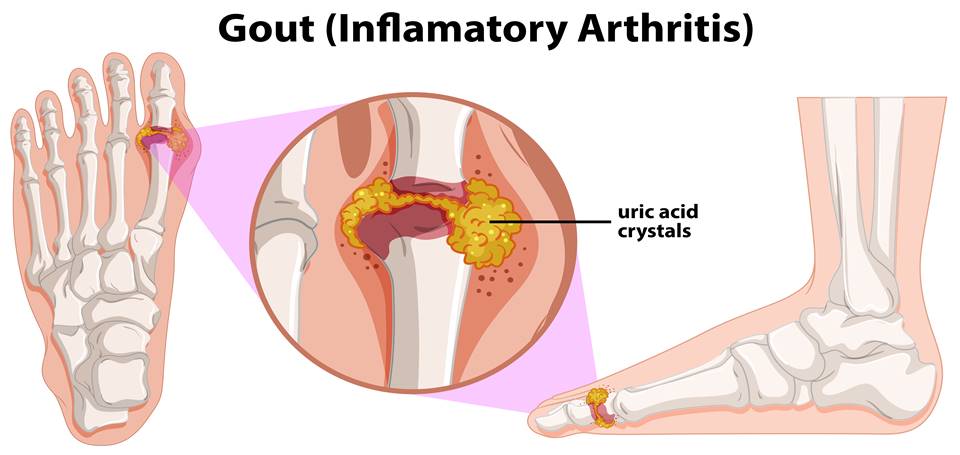
Gout is an inflammatory arthritis caused by elevated levels of uric acid in the blood, a condition known as hyperuricemia. Uric acid is produced when the body breaks down purines, naturally occurring compounds found in human cells and many foods.
Under normal circumstances, uric acid dissolves in the blood and is eliminated through the kidneys. However, when the body produces too much uric acid or the kidneys fail to remove enough of it, uric acid levels rise. Over time, needle-shaped monosodium urate crystals can form and accumulate within joints and surrounding tissues, triggering severe inflammation and pain (Dalbeth et al., 2021).
The big toe is the most commonly affected joint, but gout can also affect the ankles, knees, wrists, fingers, and elbows.
Risk factors for gout include obesity, hypertension, chronic kidney disease, diabetes, excessive alcohol consumption, diets rich in purines, certain medications such as diuretics, and a family history of the disease.

Warning Signs and Symptoms of Gout
Gout attacks often occur suddenly, frequently at night, and can be extremely painful. Symptoms may develop rapidly and peak within 12-24 hours.
Common signs and symptoms include:
- Severe joint pain, especially in the big toe
- Swelling and inflammation of affected joints
- Redness and warmth around the joint
- Extreme tenderness to touch
- Reduced range of motion
- Lingering discomfort lasting days or weeks after the acute attack
Some individuals may develop chronic gout if uric acid levels remain uncontrolled. In advanced cases, deposits of urate crystals called tophi can form under the skin, around joints, and even in the kidneys, increasing the risk of kidney stones and joint deformities.
How Healthcare Professionals Diagnose Gout
Accurate diagnosis is essential because gout symptoms can resemble other forms of arthritis and joint infections.
Healthcare providers typically use a combination of medical history, physical examination, laboratory tests, and imaging studies.
Joint Fluid Analysis
Joint aspiration remains the gold standard for gout diagnosis. A sample of fluid is removed from the affected joint and examined under a microscope for monosodium urate crystals (FitzGerald et al., 2020).
Blood Tests
Blood tests measure serum uric acid levels. Elevated uric acid levels may support a diagnosis of gout, although some patients experience gout attacks despite normal uric acid levels during acute flare-ups.
Imaging Techniques
Ultrasound and dual-energy computed tomography (DECT) can help identify urate crystal deposits and assess joint damage, especially in chronic or complex cases.
Conventional Treatment Options for Gout: What Works?
The primary goals of gout treatment are to relieve pain during acute attacks, prevent future flare-ups, and reduce uric acid levels.
Medications for Acute Gout Attacks
Several medications are commonly prescribed to reduce inflammation and pain:
- Nonsteroidal anti-inflammatory drugs (NSAIDs)
- Colchicine
- Corticosteroids
These medications are most effective when started early after symptom onset.
Urate-Lowering Therapy
For individuals with recurrent gout attacks, chronic gout, kidney stones, or tophi, long-term urate-lowering therapy may be recommended.
Common medications include:
- Allopurinol
- Febuxostat
- Probenecid
The American College of Rheumatology recommends maintaining serum uric acid levels below 6 mg/dL for most gout patients (FitzGerald et al., 2020).
Lifestyle Modifications
Lifestyle interventions play an important role in gout management:
- Maintain a healthy body weight
- Limit alcohol consumption, especially beer and spirits
- Reduce intake of high-purine foods such as organ meats and certain seafood
- Increase water consumption
- Limit sugar-sweetened beverages, particularly those containing fructose
Natural Supplements That May Support Gout Management
Natural supplements should never replace prescribed medications, but some evidence suggests they may help support healthy uric acid metabolism and reduce inflammation when used alongside standard care.
Tart Cherry Extract
Tart cherries contain anthocyanins, powerful plant compounds with anti-inflammatory and antioxidant properties. A large observational study involving 633 individuals found that cherry consumption was associated with a 35% lower risk of recurrent gout attacks (Zhang et al., 2012). Researchers suggest that cherries may help reduce uric acid levels and inflammation.
Vitamin C
Vitamin C may promote uric acid excretion through the kidneys. A meta-analysis reported that vitamin C supplementation significantly reduced serum uric acid concentrations, particularly among individuals with elevated baseline levels (Juraschek et al., 2011). Although vitamin C alone is not a treatment for gout, it may provide supportive benefits.
Omega-3 Fatty Acids
Omega-3 fatty acids from fish oil possess well-documented anti-inflammatory properties. While evidence specifically targeting gout is limited, omega-3s may help reduce inflammatory responses and support overall joint health.

Magnesium
Emerging research suggests that magnesium may help regulate inflammatory pathways and support metabolic health. Some studies have observed an association between higher magnesium intake and lower serum uric acid levels, although more research is needed.
Adequate Hydration
One of the simplest home-based strategies is maintaining proper hydration. Drinking sufficient water helps support kidney function and may enhance uric acid elimination.
Dietary Approaches
A Mediterranean-style eating pattern rich in fruits, vegetables, whole grains, legumes, nuts, and olive oil may help reduce inflammation and improve metabolic health. Limiting highly processed foods and sugary beverages may also support healthy uric acid levels.
Weight Management
Weight loss in overweight individuals has been associated with reductions in serum uric acid levels and gout flare frequency. Sustainable lifestyle changes are generally more effective than restrictive diets.
Key Takeaway
Gout is a painful inflammatory arthritis caused by the accumulation of uric acid crystals within the joints. Symptoms often include sudden joint pain, swelling, redness, and tenderness, most commonly affecting the big toe. Accurate diagnosis typically involves joint fluid analysis, blood tests, and imaging studies.
Natural approaches such as healthy weight maintenance, proper hydration, dietary improvements, and selected health supplements, may help reduce flare-ups, support uric acid balance, and promote long-term joint health.
References
- Dalbeth N, Choi HK, Joosten LAB, et al. (2021). Gout. Nature Reviews Disease Primers, 7(1), 69.
- FitzGerald JD, Dalbeth N, Mikuls T, et al. (2020). 2020 American College of Rheumatology Guideline for the Management of Gout. Arthritis Care & Research, 72(6), 744-760.
- Zhang Y, Neogi T, Chen C, et al. (2012). Cherry consumption and decreased risk of recurrent gout attacks. Arthritis & Rheumatism, 64(12), 4004-4011.
- Juraschek SP, Miller ER III, Gelber AC. (2011). Effect of oral vitamin C supplementation on serum uric acid: A meta-analysis of randomized controlled trials. Arthritis Care & Research, 63(9), 1295-1306.
- Richette P, Doherty M, Pascual E, et al. (2017). 2016 Updated EULAR evidence-based recommendations for the management of gout. Annals of the Rheumatic Diseases, 76(1), 29-42.
- Khanna D, Fitzgerald JD, Khanna PP, et al. (2012). 2012 American College of Rheumatology Guidelines for Management of Gout. Arthritis Care & Research, 64(10), 1431-1446.